
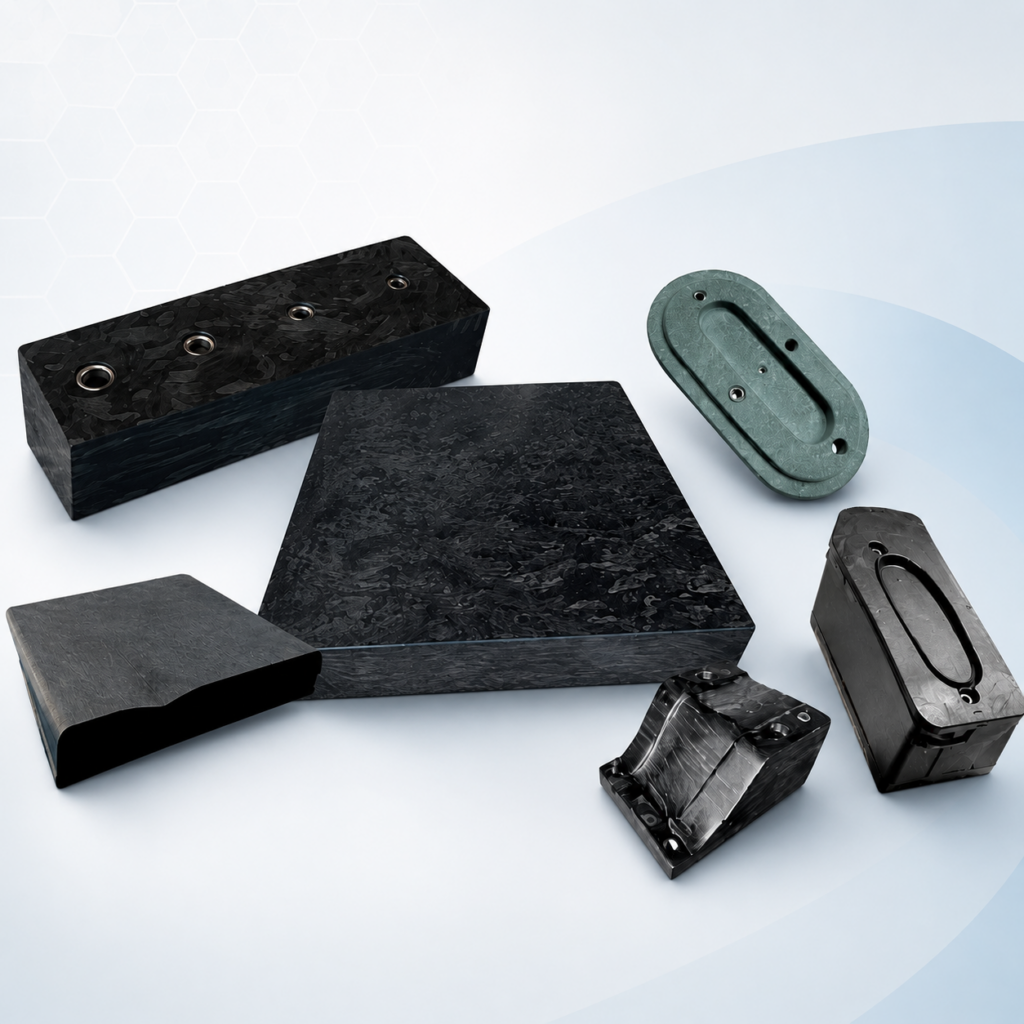
We spoke with Simon Gibbs, Business Development Executive at Cristex, about the growing interest in C-Block tooling materials and where they can support composite manufacturing applications.
Q: What is driving interest in C-Block materials?
There’s a growing focus across composite manufacturing on reducing process time while still maintaining accuracy and repeatability. Traditional tooling routes can involve multiple stages before you get to the final production tool, so manufacturers are naturally looking at ways to simplify that process where possible.
C-Block materials are attracting interest because they can help reduce some of those stages by allowing direct CNC machining into the final tooling geometry.
Q: What are some of the key technical benefits?
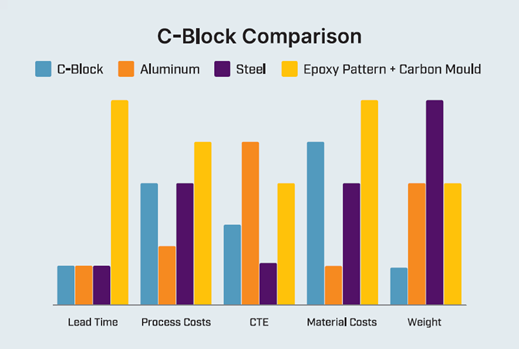
One of the biggest advantages is the low coefficient of thermal expansion (CTE). That’s particularly important in oven and autoclave curing environments where thermal movement can affect dimensional accuracy.
Better thermal stability means scaling is easier to control, which becomes increasingly important in applications where repeatability and precision matter.
Q: Where are these materials typically used?
We’re seeing interest across several sectors, particularly automotive and motorsport, where tooling accuracy and turnaround times are both important.
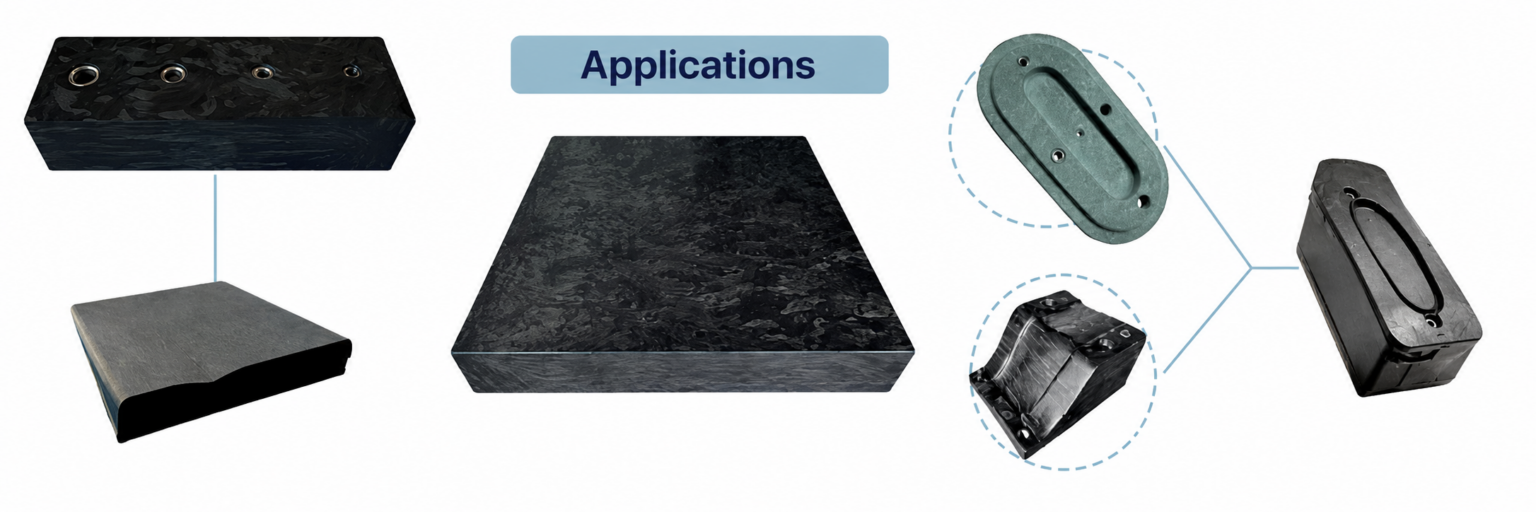
Typical applications can include:
• Direct mould tooling
• Tool inserts
• Hard points and bolted insert areas
• Complex geometries requiring controlled demoulding
The material also offers very good insert retention properties for threaded inserts and fixing system.
Q: How does this compare to more traditional tooling methods?
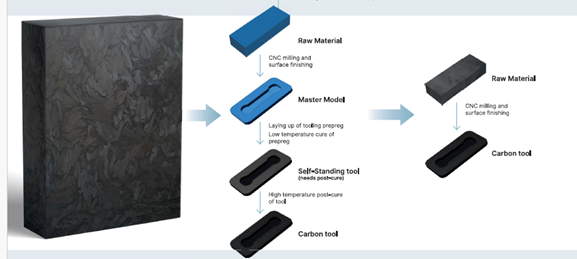
Conventional carbon tooling can involve machining a master pattern, producing prepreg tooling and post-curing.
With C-Block materials, you can replace these stages with a single machining operation, which can help simplify manufacturing and reduce overall process time.
The comparison graphic is a good visual example of that difference.
Q: Why is application-led material selection becoming more important?
Manufacturers are under increasing pressure to improve efficiency without compromising quality. Because of that, material selection is no longer just about mechanical performance, it’s also about process optimisation, dimensional control, manufacturability, and long-term repeatability.
That’s where these types of advanced tooling materials can add real value.
As composite manufacturing continues to evolve, manufacturers are increasingly looking for ways to improve tooling efficiency, reduce process complexity, and maintain dimensional accuracy. Materials such as C-Block are helping support that shift across a growing range of advanced manufacturing applications.